

Heart of the Silk Road
Bukhara
Uzbekistan
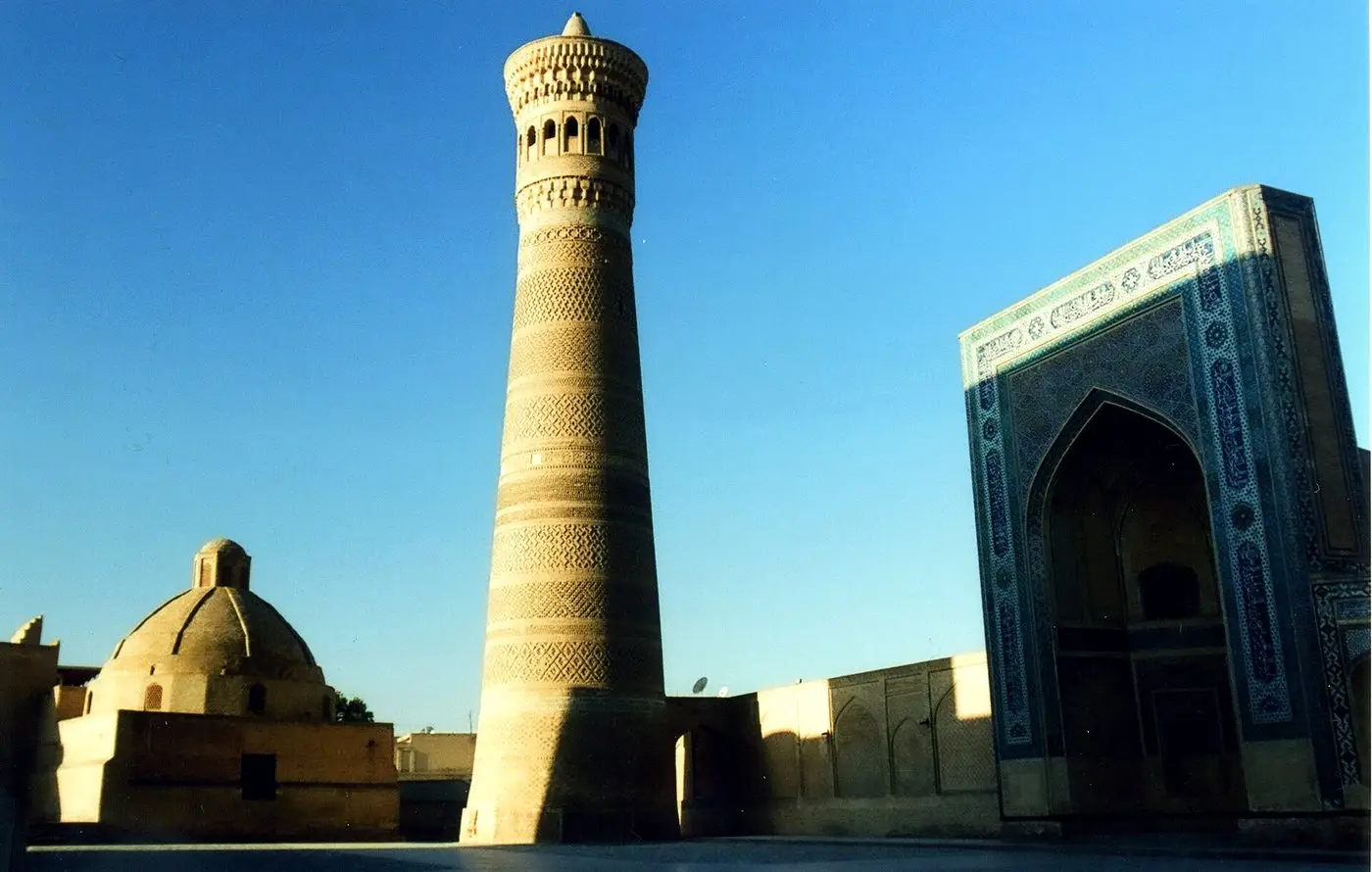
The Poi-Kalon ensemble, with its 12th-century Kalyan Minaret, presides over a UNESCO-listed historic centre of madrasas, trading domes and pools.
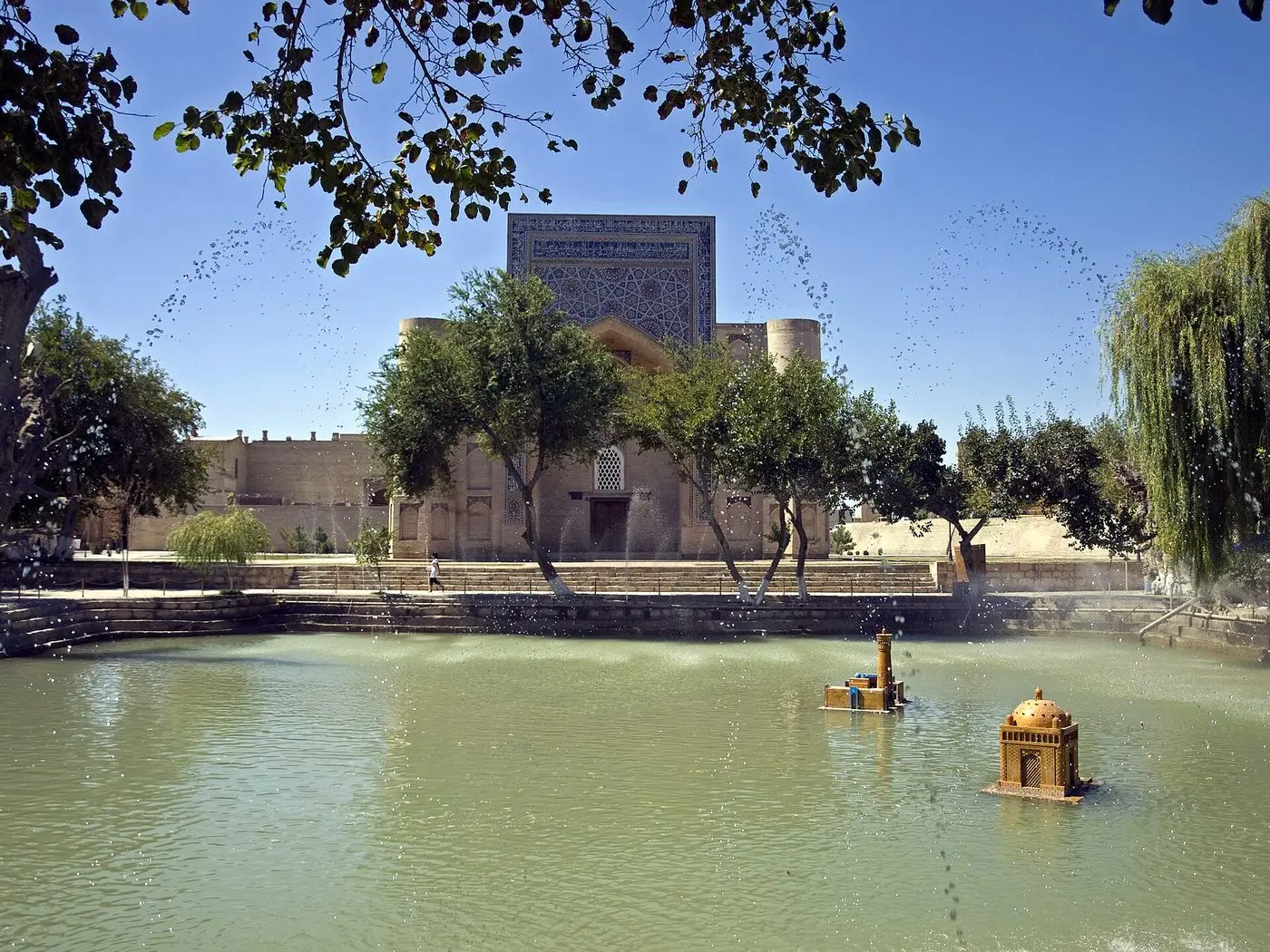
The Kalyan Minaret, trading domes and life around Lyab-i Hauz.
Travel insight
Bukhara- Best season
- All year · ideal in spring & autumn
- Travel type
- Heritage & crafts
- Key attractions
- Poi-Kalon · Lyab-i Hauz · Ark
Heart of the Silk Road
Bukhara
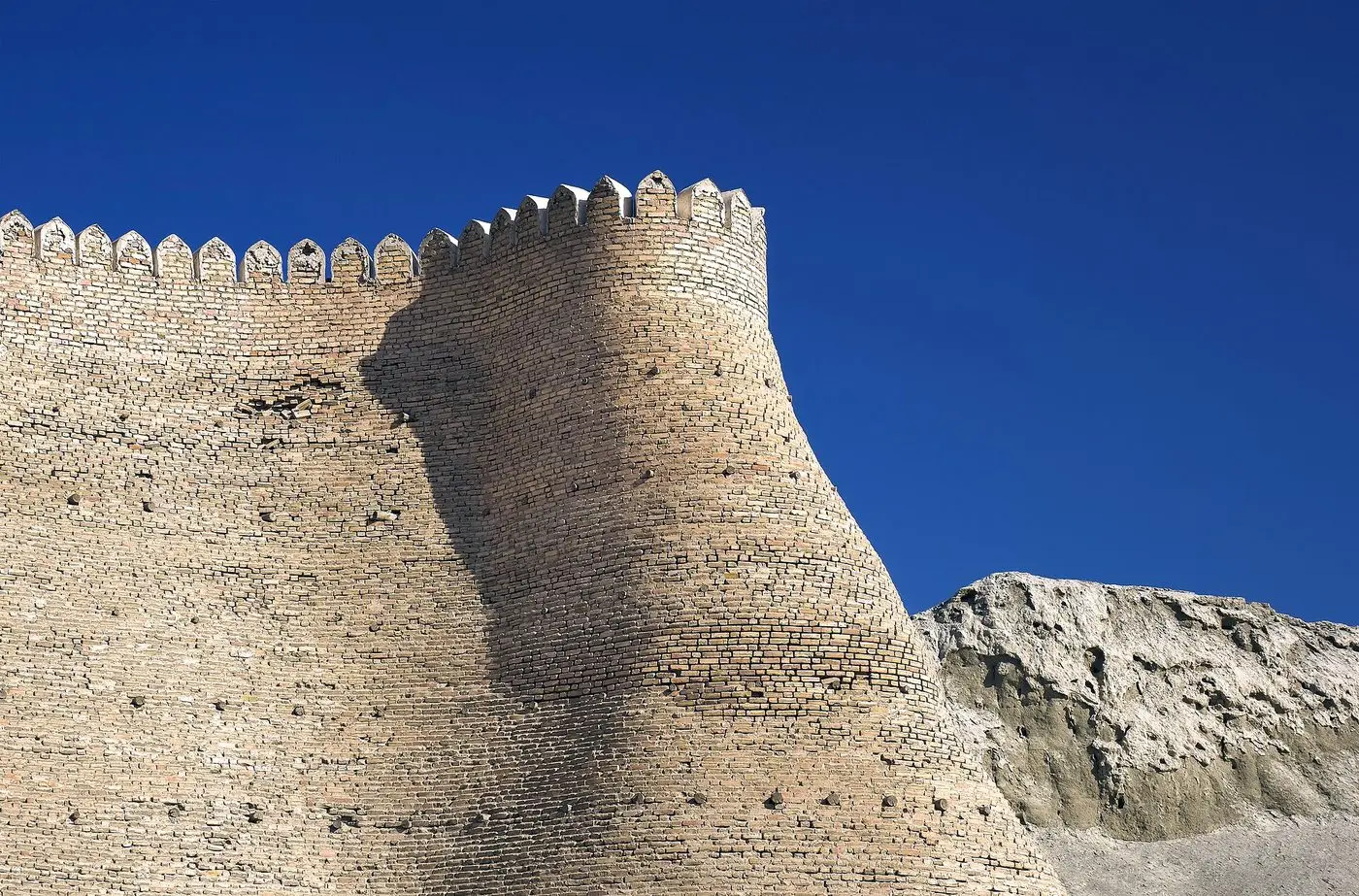
For centuries Bukhara was a major centre of trade and learning. The Kalyan Minaret, built in 1127, survived the conquests and still anchors the Poi-Kalon ensemble with the Kalyan Mosque and the Mir-i-Arab Madrasa. The Lyab-i Hauz pool, the trading domes and the Ark fortress complete a city best explored on foot.
Top experiences
UNESCO heritage
Poi-Kalon Ensemble
The Kalyan Minaret (1127), the Kalyan Mosque and the Mir-i-Arab Madrasa.
Local life
Lyab-i Hauz
A pool framed by madrasas and mulberry trees, the city’s meeting point.
History
The Ark Fortress
The citadel of the emirs of Bukhara, with museums inside its walls.
Good to know
City of learning
Ibn Sina (Avicenna) was born near Bukhara in 980 and studied in its library; the hadith scholar al-Bukhari also came from here.
Trading domes
The covered bazaars of the 16th century — Toki Zargaron, Toki Telpak Furushon and Toki Sarrafon — are still a place of craftsmen and traders.
Highlights
Bukhara: what to see
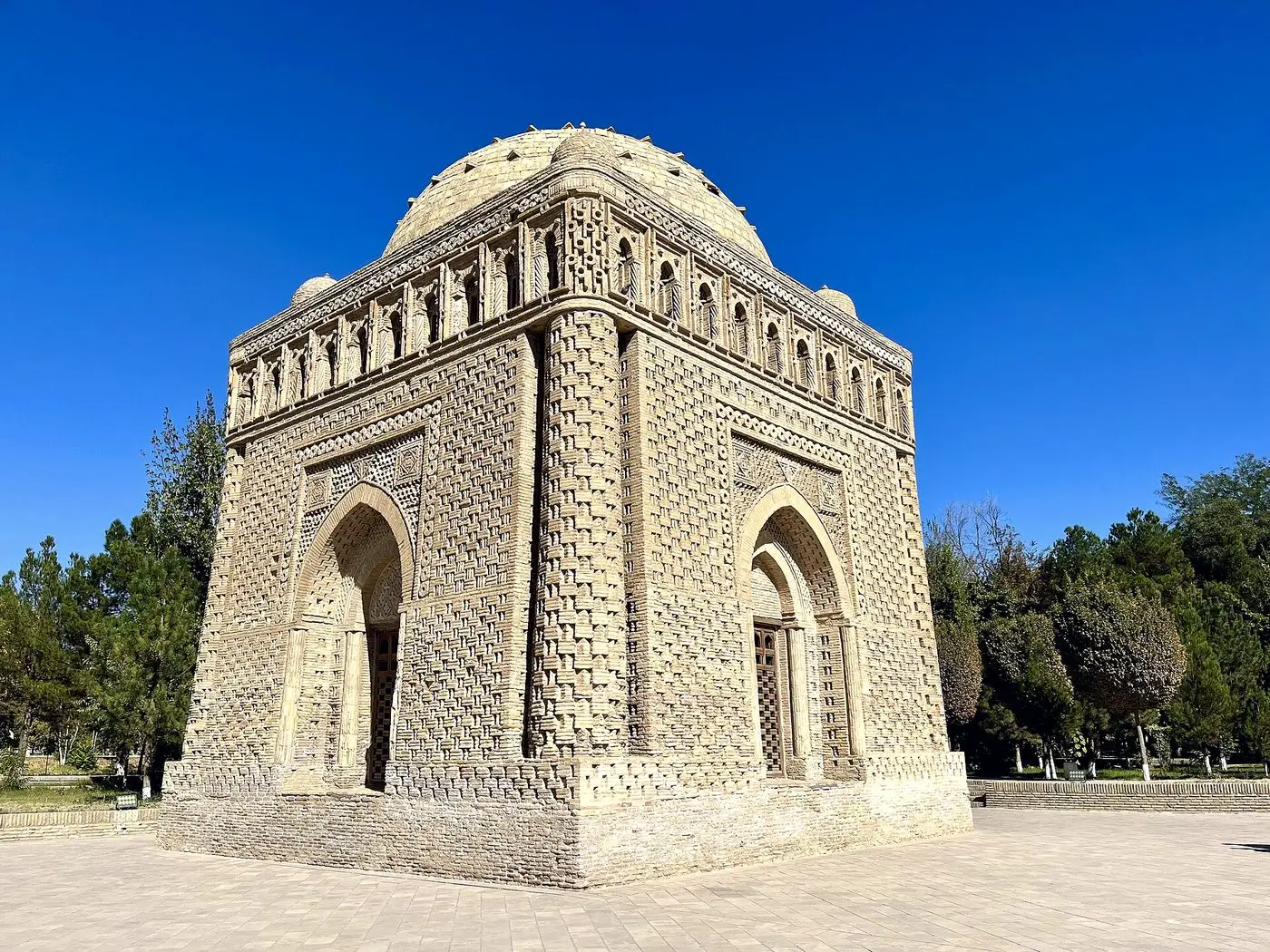
Samanid Mausoleum
10th century. A cube of brick whose patterns change with the light: one of Central Asia’s oldest funerary buildings.
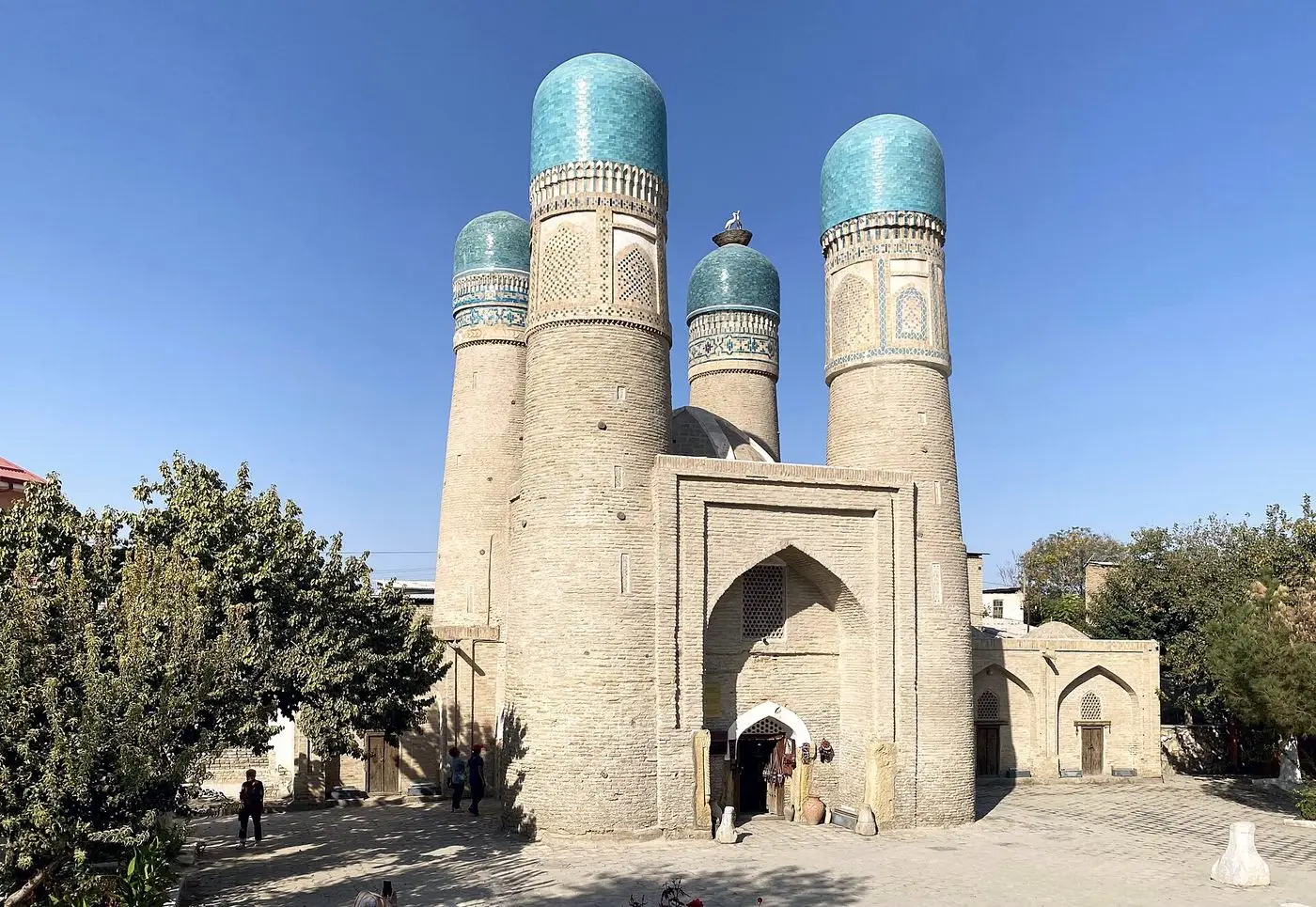
Chor Minor
“Four minarets”: the gatehouse of a vanished madrasa, its four towers under turquoise domes, north-east of Lyab-i Hauz.
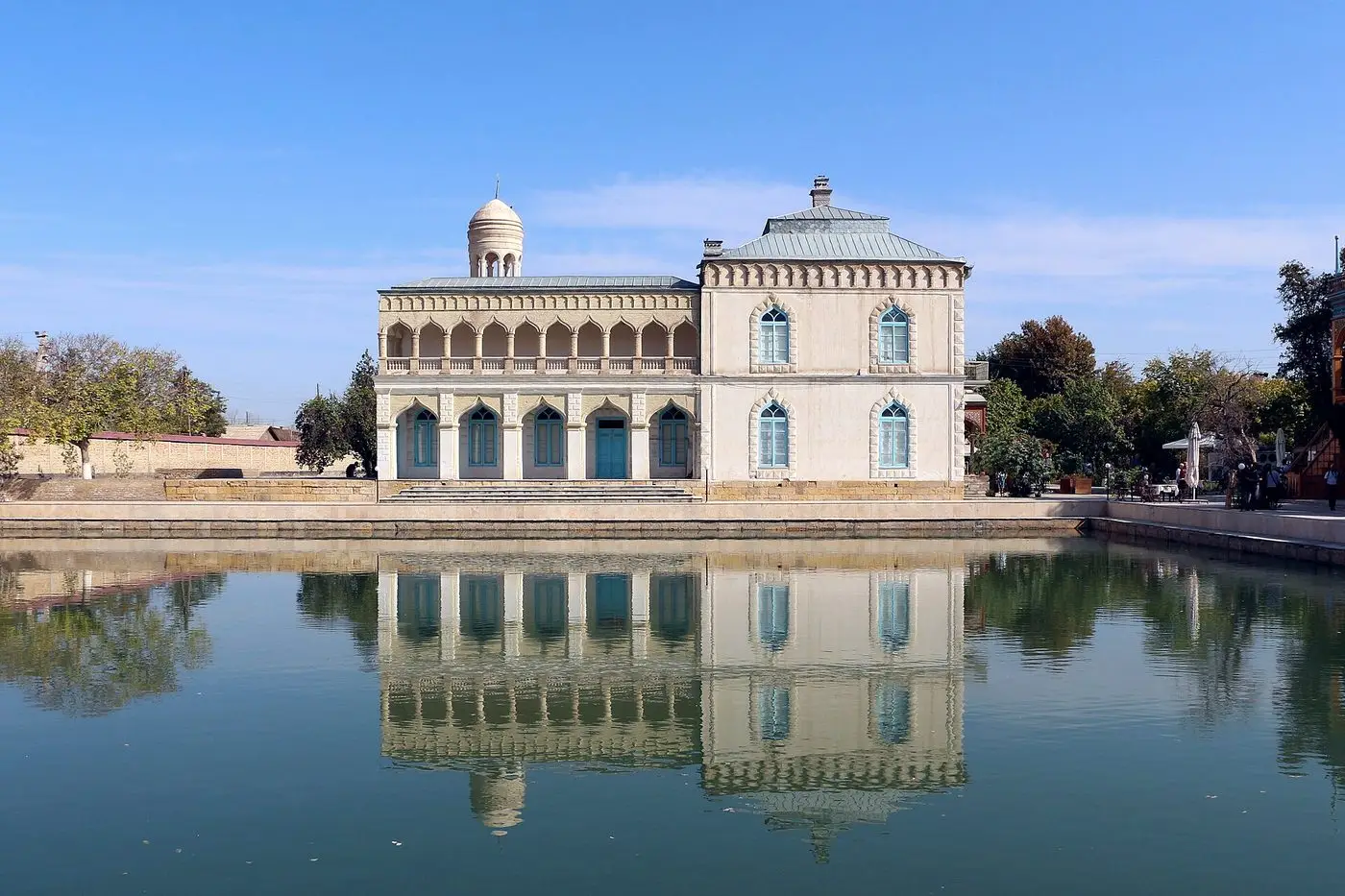
Sitorai Mohi Khosa
The summer residence of the last emir, outside the city: Eastern and European halls, gardens and a pond.
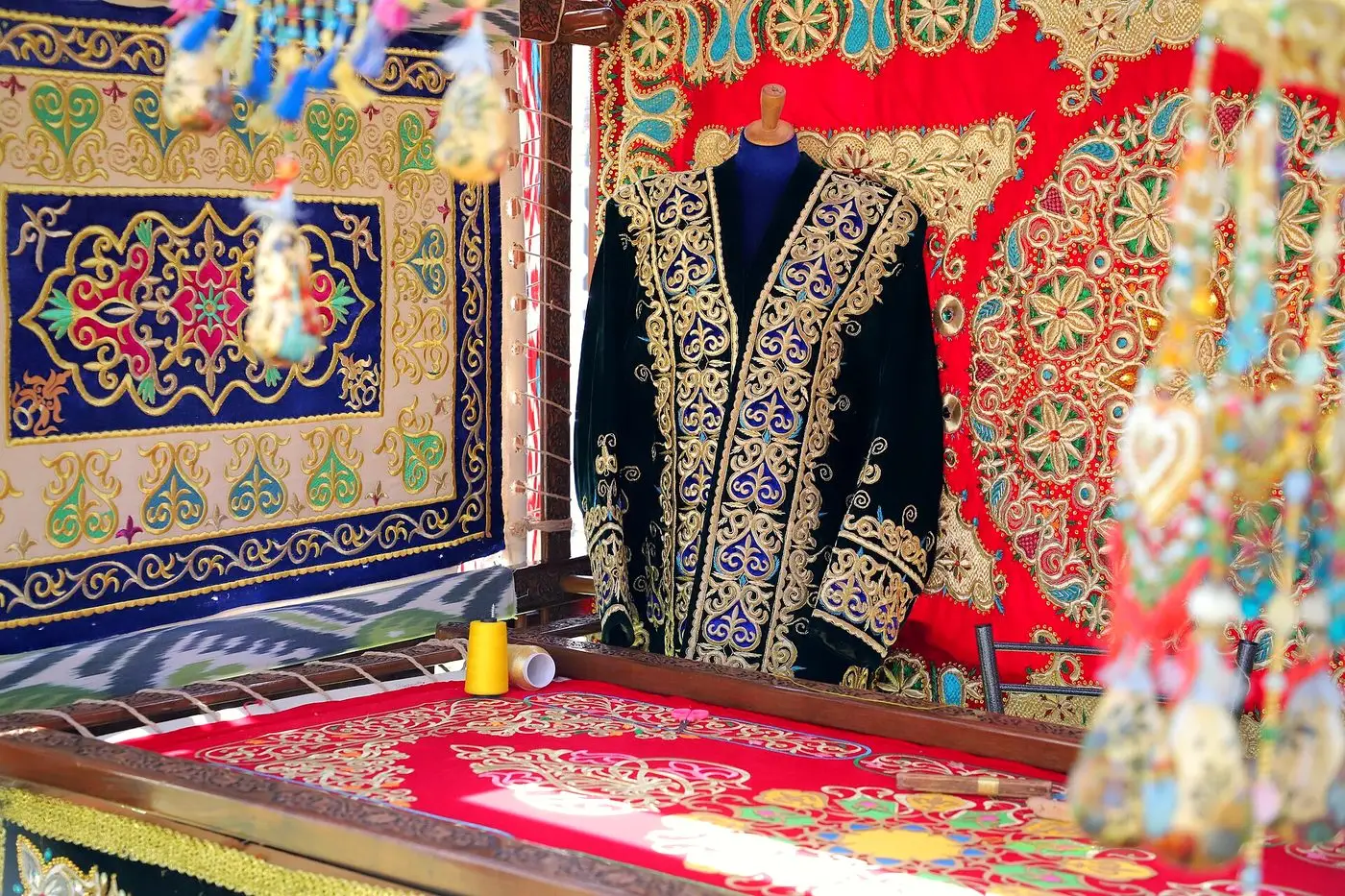
Gold embroidery
Zardozi adorned the robes of the emir’s court. Bukhara’s workshops still embroider velvet with gold thread.