

Explore Uzbekistan
Samarkand
Uzbekistan
A UNESCO-listed crossroads of cultures, where the madrasas of the Registan, the Shah-i-Zinda necropolis and the Gur-e-Amir mausoleum tell the story of the Silk Road.
Registan Square, turquoise domes and centuries of Silk Road history.
Travel insight
Samarkand- Best season
- All year · ideal in spring & autumn
- Travel type
- Heritage & culture
- Key attractions
- Registan · Shah-i-Zinda · Gur-e-Amir
Explore Uzbekistan
Samarkand
Samarkand was one of the great centres of the Silk Road and the capital of Amir Timur. Registan Square brings together three madrasas — Ulugh Beg, Sher-Dor and Tilya-Kori — whose glazed tilework is among the most recognisable images of Central Asia. The historic town is inscribed on the UNESCO World Heritage List as “Samarkand – Crossroad of Cultures”.
Top experiences
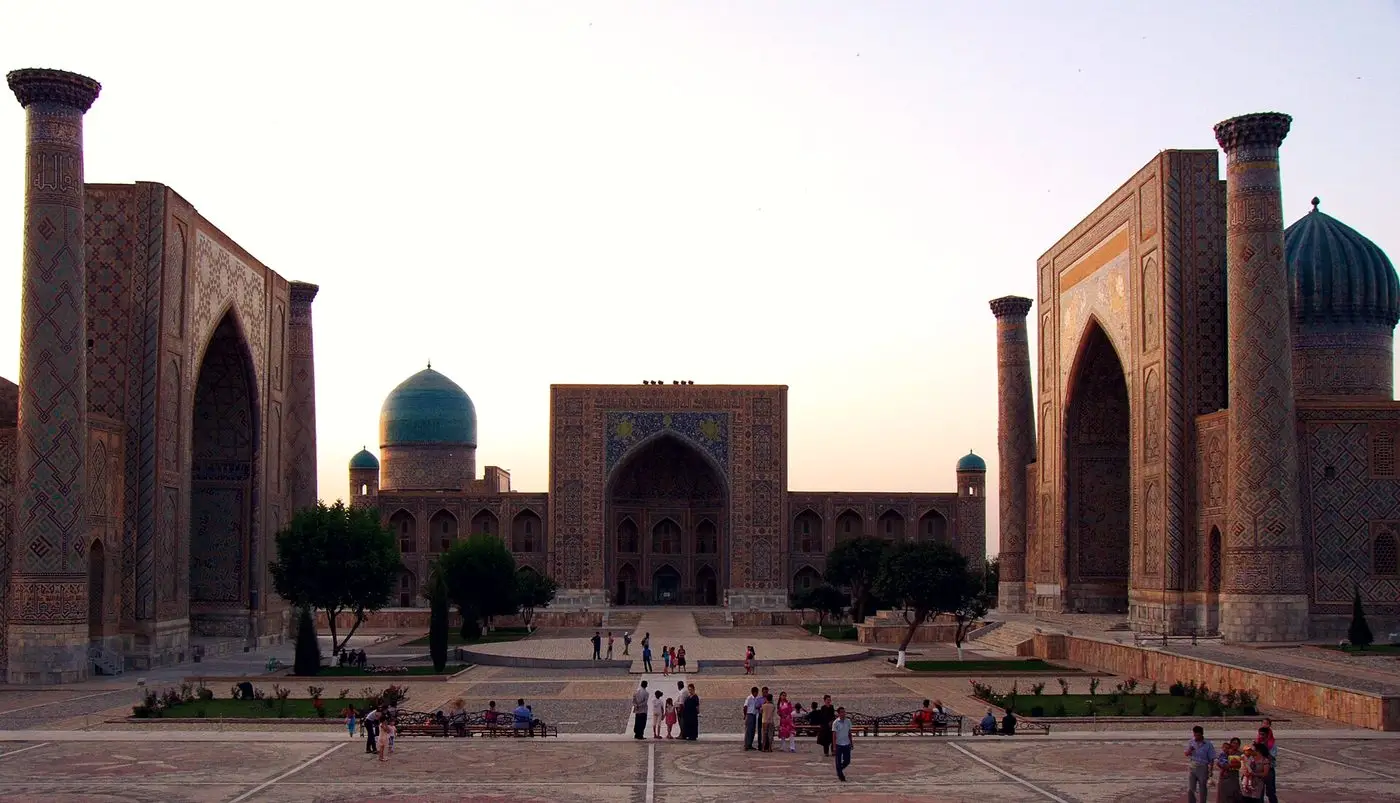
UNESCO heritage
Registan Square
Three 15th–17th-century madrasas facing one another, at their best around sunset.
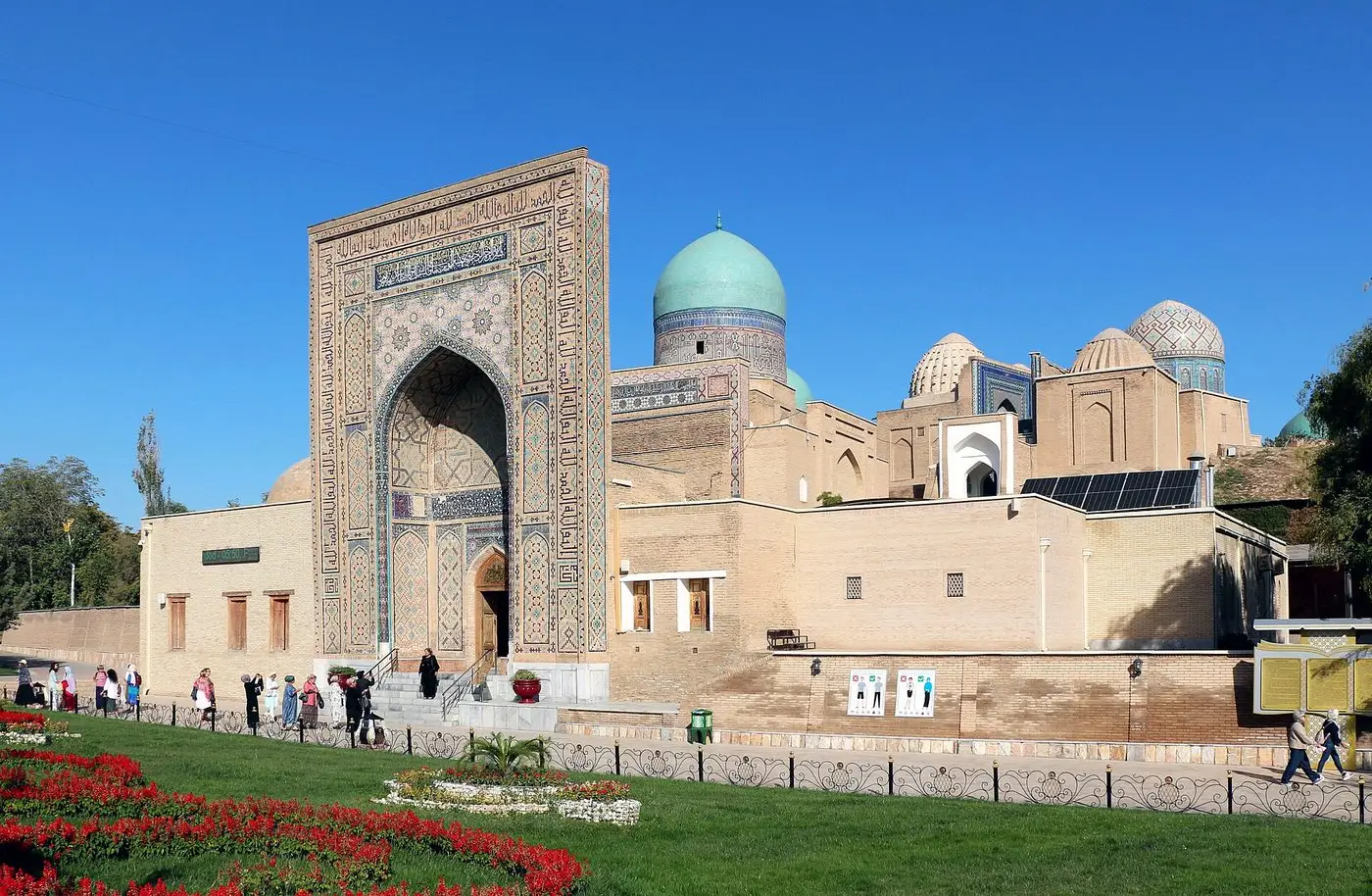
Architecture
Shah-i-Zinda Necropolis
A street of blue-tiled mausoleums spanning the 11th to the 19th century.
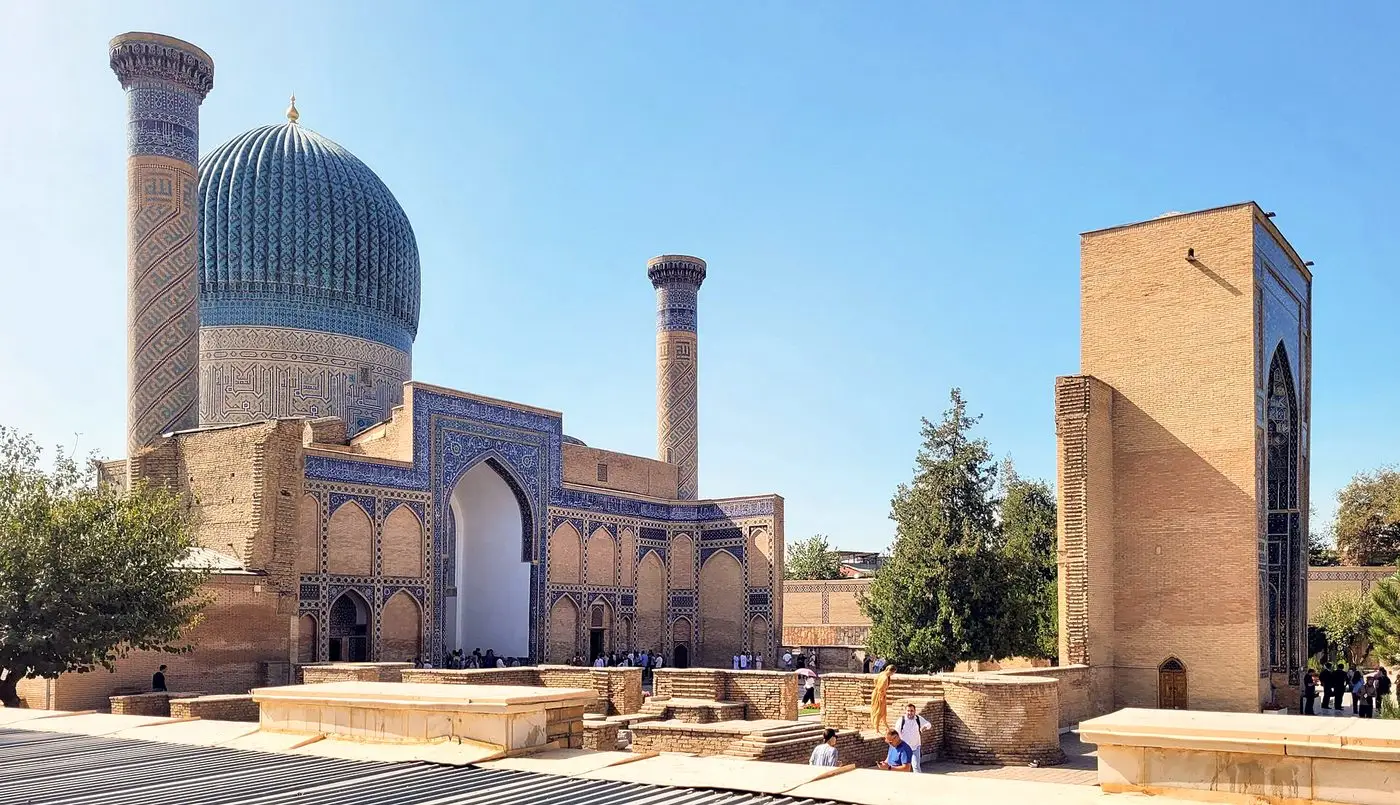
History
Gur-e-Amir Mausoleum
The tomb of Amir Timur beneath a ribbed turquoise dome.
Good to know
Timur’s capital
In 1370 Amir Timur made Samarkand the capital of his empire and gathered architects and craftsmen from the cities he conquered.
Samarkand paper
The city was famous for paper made from mulberry bark. At Konigil, on the outskirts, a mill has revived the craft.
Highlights
Samarkand: what to see
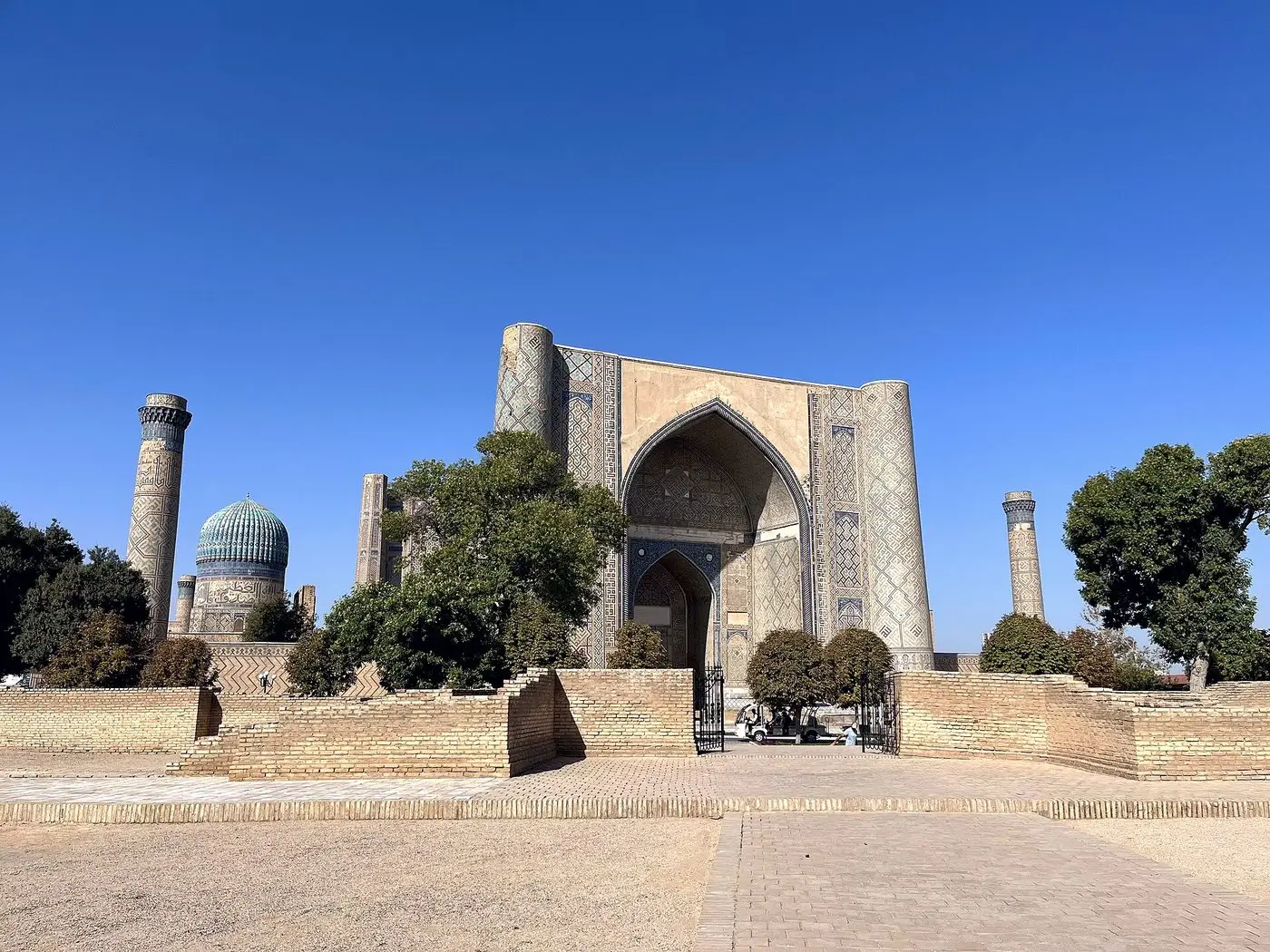
Bibi-Khanym Mosque
In the 15th century it was one of the largest mosques in the Islamic world. Its blue domes were largely restored in the 20th century.
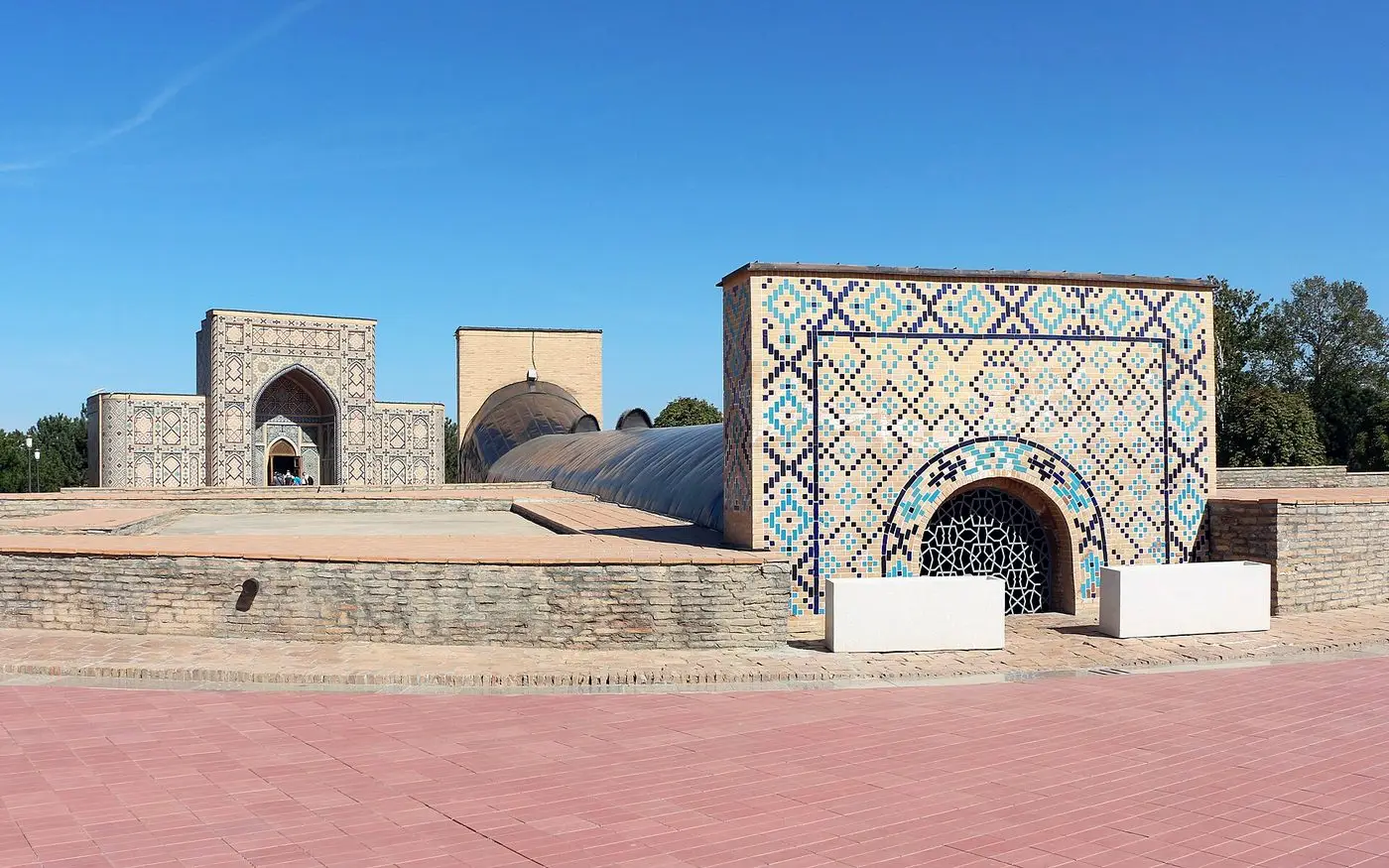
Ulugh Beg Observatory
Built in the 1420s by the astronomer and ruler Ulugh Beg and rediscovered in 1908: part of the great sextant survives.
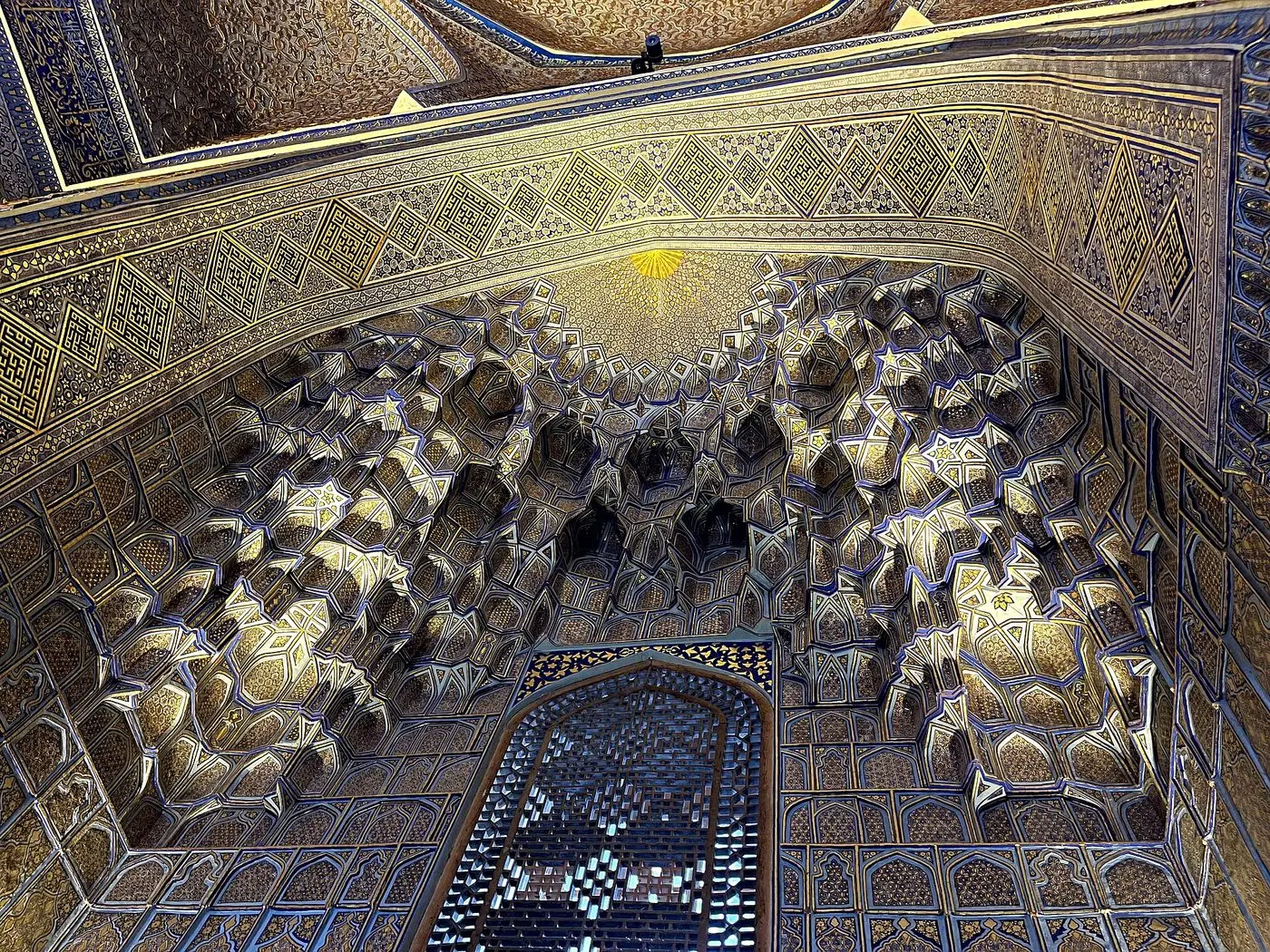
The muqarnas of Gur-e-Amir
Stalactite vaulting above the portal of Amir Timur’s mausoleum; inside, the hall shines with gilding and onyx panels.